From story idea to possible book success – how to tell it, how to get it out there!

 iHeartRadio iHeartRadio
  Spotify Spotify
  Amazon Music Amazon Music
  Pandora Pandora
  Apple Podcasts Apple Podcasts
  Podchaser Podchaser
  Deezer Deezer
  Audible Audible
  Youtube Music Youtube Music
  Spreaker Spreaker
  Podcast Addict Podcast Addict
  YouTube YouTube
  Castbox Castbox
  Podverse Podverse
  Podurama Podurama
  PocketCasts PocketCasts
  Overcast Overcast
  Goodpods Goodpods
  Fountain Fountain
  Podyssey Podyssey
  Castro Castro
  Castamatic Castamatic
  RSS Feed iHeartRadio iHeartRadio Spotify Spotify Amazon Music Amazon Music Pandora Pandora Apple Podcasts Apple Podcasts Podchaser Podchaser Deezer Deezer Audible Audible Youtube Music Youtube Music Spreaker Spreaker Podcast Addict Podcast Addict YouTube YouTube Castbox Castbox Podverse Podverse Podurama Podurama PocketCasts PocketCasts Overcast Overcast Goodpods Goodpods Fountain Fountain Podyssey Podyssey Castro Castro Castamatic Castamatic
 Come along with guest Andrew John Robinson as we “talk story”. Take your story from notebook to novel, and possibly all the way to who knows? This podcast walks you through outlining, writing, revising, publishing, and adapting your story for multiple platforms. Whether you’re stuck mid-draft or lost in the world of self-publishing vs. traditional deals, navigate the storytelling process and find your unique publishing path.
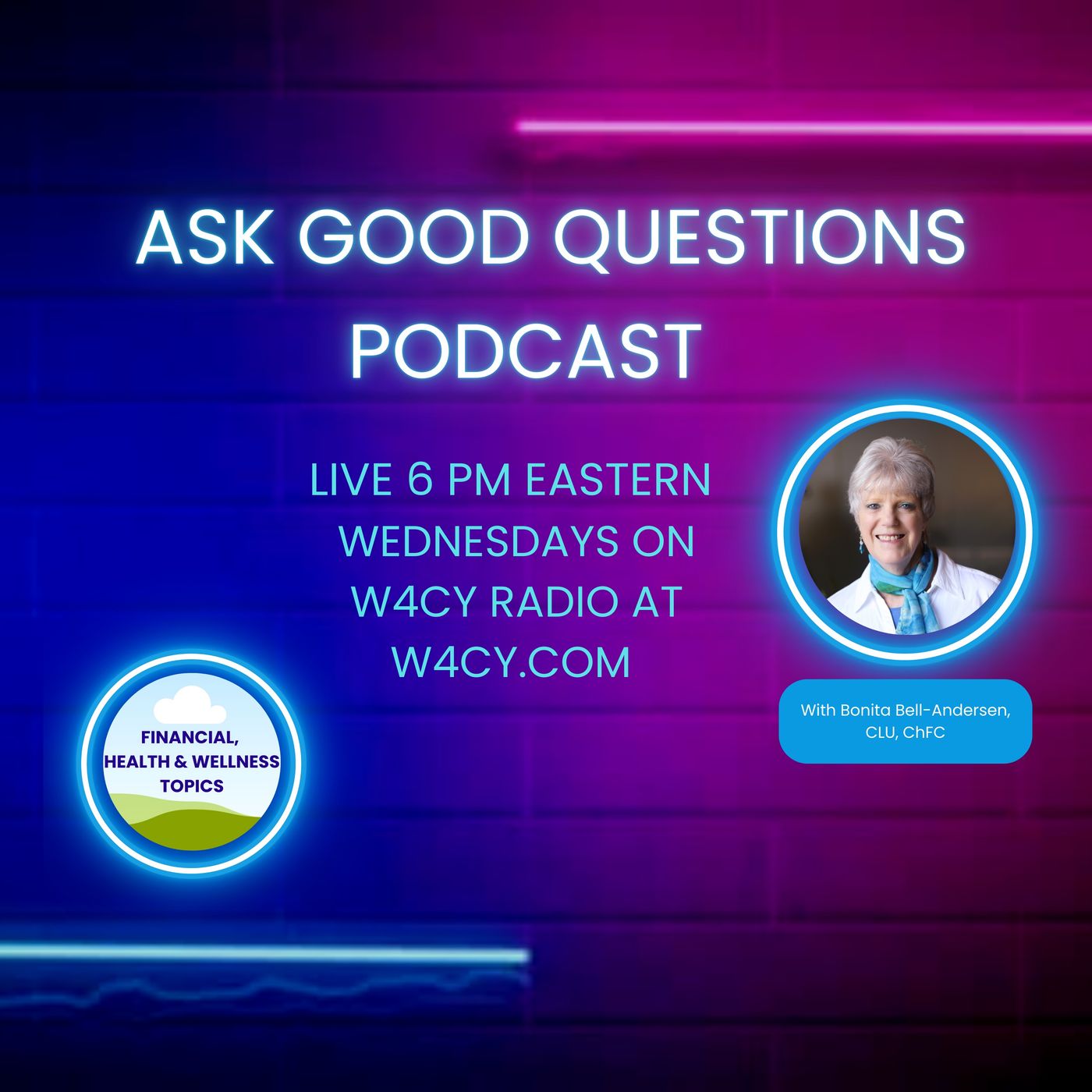
Ask Good Questions is broadcast live Wednesdays at 6PM ET on W4CY Radio (www.w4cy.com) part of Talk 4 Radio (www.talk4radio.com) on the Talk 4 Media Network (www.talk4media.com). Ask Good Questions is viewed on Talk 4 TV (www.talk4tv.com).
Ask Good Questions Podcast is also available on Talk 4 Media (www.talk4media.com), Talk 4 Podcasting (www.talk4podcasting.com), iHeartRadio, Amazon Music, Pandora, Spotify, Audible, and over 100 other podcast outlets.
Become a supporter of this podcast: https://www.spreaker.com/podcast/ask-good-questions--6441735/support.
0:00 The topics and opinions expressed in the following show are solely those of the hosts and their guests and not those of W FOURCY Radio. It's employees are affiliates. We make no recommendations or endorsements for radio show programs, services, or products mentioned on air or on our web. No liability explicitor implies shall be extended to W FOURCY Radio or its employees are affiliates. Any questions or comments should be directed to those show hosts. Thank you for choosing W FOURCY Radio. Welcome to to Ask Good Questions podcasts, broadcasting live every Wednesday, six pm Eastern Time on W four CY Radio at w four cy dot com. This week and every week, we will reach for a higher purpose in money and life, as well as a focus on health and wellness. Now, let's join your host, Anita bell Anderson, as together we start with Asking Good Questions.
1:01 Hey, hello, and thank you so much for joining the podcast. This is Ask Good Questions and we are going to do that today, so please help me. Welcome my guest today, an author, a writer, a guy with some thoughts about the whole thing about writing and publishing. And at the end, make sure you stick around because there's going to be a little story about Jaws, and if you've seen it, they're doing trailers about bringing it back after fifty years or something like that. Anyway, help me. Welcome to the Proverbial podcast stage, Andrew John Robinson.
1:44 Thank you, thank you. Hi Andrew, thank you, thank you for coming. Hey, let me just ask you. I'm going to just have you tell us a little bit about you. We know you're and a writer, but tell us a little bit about you. Where you're coming from? Sure? Well, I was born and raised in Arlington, Massachusetts, a good old New England boy, Islington, as I would say, spent my childhood there and spent every summer on Martha's Vineyard, Martha's Vineyard vineyard, the Island as we call it. Then moved to Florida. My dad had retired and my mother good Italian girl war bride who just couldn't stand the New England winters anymore. So we moved down to Florida and I went to high school and college there, went to Georgia Tech, became a civil engineer, but always had this craving to be a little more creative. So that's when I got into writing and now I'm a published author and also write movie scripts, television, done a variety of things over the years and now living in the Orlando area with my wife and son and try to and be active in the writing community. I'm a leader of the Orlando chapter of Florida Writers' Association, nonprofit group with writers helping writers, that's our motto, and so I figure out, well, here's a chance for me to continue helping writers. Just to tell you folks and tuning in here a little bit about writing techniques.
3:17 Awesome. Well, we're going to divide it. We're going to talk the first few minutes, we're going to talk about writing, getting started with writing, how would you even begin that whole process? And then I want you to talk a little bit about your take on publishing. And then at the end, we've got a special story because you were around when they filmed Jaws, and so we'll save that for the very end. So let's talk about writing. Let's just get right into it. How do you capture that first spark? Where do you feel like wanting to that you have a story idea, Where do you feel that it comes from.
4:00 Well, for me, it's been a variety of things. The very first story I ever wrote was a murder mystery, and it actually grew out of the fact that my brothers and I we had owned, we had inherited a little cottage on Much's vineyard, as I mentioned, and sadly we weren't able to afford to keep it anymore, you know, the upkeep taxes, everything we had to seller. And for me emotionally, it was very devastating, and so I kind of funneled that into the idea of writing a story. Well, I, of all things, I, as I said, was working as civil engineer, and we get all these trade magazines in the office, things like, you know, a roadway and paving, you know, real real exciting stuff. You know, you should see the centerfold. Yeah, all that asphalt. Oh wow. Yeah. Anyway, the magazines they had articles about the latest developments in the industry. Well, this one article was about a new device, a GPS camera that surveyors could use. They could go out on a site take pictures and the picture would be stamped with the date, the time, and the location where the picture was taken. And I looked at that, and I mean I thought to myself, wow, you could use that in a murder mystery. You know, think about it.
5:19 Some survey crew they're out taking pictures of a site, and oh, in the background of one picture is a man with this shocked expression on his face because oh no, they're thirty by picture and he's this fellow who, oh, his rich old uncle was in the house next door and died, you know, quite unexpectedly, and he was supposedly one thousand miles away when it happened. Proof that he was there. He's the killer. And so I kind of developed a story about you know, yes, here's this you know, greedy son who wants to he wants to sell the family estate and you know, get money, and then this other son, you know, wants to protect it because it's you know, heritage and you know, family and all that kind of stuff. And slowly I built this story and became a murder on gossen Old Island. As you might expect, I kind of took Martha's vineyard dot and kind of massaged it into this fictional location. And so I wrote this book, and Frank I've been trying to get it published ever since. But it inspired me to start writing other things. When the Harry Potter books came out, my daughter.
6:30 She loved them. Oh, she just devoured them. And I read them too and enjoyed them very much. But I looked at them and said, geez, you know what, they're awfully boy centric. You know, yeah, there's harmony, and she's very smart and all, but she's not very proactive. You know, the boys are going to go into the forbidden force. She's like, no, no, don't do that. That's wrong. You know, follow the rules. And I just thought, well, can't we have an action adventure story where the girl is saying, yeah, let's go do this. I think be the proactive one. Well, well, Andrew, I'm wondering, are you following an outline or I mean I think here, you are a civil engineer, but your brain is kind of like your creative brain is just like taking over. Are you following an outline or you just kind of just organically developing it?
7:23 Yeah, well, I'm not like Carolac. I don't do stream of consciousness. I do create some type of outline. It just it has depended on the story. Now, in the case of the murder mystery, yes, I mean, all my goodness, I started with little post it notes. You're like, oh, this is a good point and that's a good point, and had them all over my desk and then I would start to gather them together. All of these post it notes are about this character, and all this are about this plot point, and kind of you know, merge them. With the ever get stuck? I feel like you ever stall out or get stuck? Oh yeah, so frequently, and that's when it's like, you know, I try and come at it from a different angle, like, well, all right, I can't work.
8:07 On that. Section X, you know whatever it is, that chapter, that plot point, whatever, let me go write some other section. Like I mean a perfect example of this when I was working on the biography about my parents. They met during World War two. My mother was a war bride and she was born and raised in Florence, Italy, and my father was in the army. In that case, I was unsure how to do the story, how to structure it. So what I did was write a series of little short stories. So like, this is good for somebody that just wants to write their family history. Yeah yeah, And that's what I thought too, so I developed it. I call it the short story approach, where you do these little self contained stories. So my dad in Biserta in Tunisia. You know my mother oh with the you know, the German having her appendix appendicitis. My mother falling in love with Pascuale her you know her, Oh, the Italian Gary Cooper, That's how she described him, you know, and her parents denying the marriage because oh he's no good, he'll never bompt anything type thing. My parents meeting, you know, they're courting. Oh, my father, my father capturing the Castle Gondolfo for those of you who are Catholic, that's the pope summer house. And yes he single handedly kept it.
9:30 Not really a big deal. I mean, the the caretaker just signed a piece of paper saying I surrender the Castle Gondolpho to Warrant Officer Arthur Robinson, who you know. Not pretty exciting, but. Well, I'm thinking I'm having to kind of smoosh ideas because of time. But I'm just thinking, do you think that every story can work across formats like a short story or a script or a novel, or are something suited better to one type of structure than others or a medium? Well it can, yeah, I mean I can certainly see where like in the case of saying my murder mystery.
10:15 Having a very detailed outline, you know, is very important because of course, you know, you have the clues that you want to to, you know, sprinkle through your story so that you're like, okay, you know, in chapter seven, this has to happen. This character has to say this because it's important. In the case of like my parents' story. With the short story format, it allowed me to like almost like painting a mosaic or building a puzzle. You know, it's not like, oh I started it A and ended at Z. It's I jumped around because that made it very easy. It was very flowing. Then when when all these short stories were done, I literally printed them out and then kind of laid them on a table and said, well, okay, these are chapter one. Here's chapter two. You know, was able to gather and then go with course into my computer and it's like, okay, start start combining these files, you know, cut and paste. That's the that's the power of the computer. And other times when I've had a story that was like this, the story is very thin, you know, I don't have much to it. That's where I feel like if I write it as a screenplay, then I can get then I can at least write out the entire story, you know.
11:32 So I think what you're meaning is like, have this character say this, and then have that character say that. Yeah, because the great power of screenplays is that you don't focus on the action. You don't focus on the characters and the locations. The descriptions there are very simple, very minimal, so you're just trying to tell the story. So when I've had books in the past to where I'm like, here's you know, I want to write this as a book, but I can't, Like you say, you get stuck. I can't come up with enough of a story. Well, writing it as a screenplay, I'm able to. Okay, I do all the dialogue, so I'm sorry everything now what everybody's saying. So, and I do little descriptions, oh that you know they meet in the Italian restaurant, you know, boom, that's all you say. You know, you don't get into a lot of detail. I'm able to tell the entire story.
12:28 Then I do the classic You step back and you look at it and you say, okay, now where can I add stuff? Where can I build on this? Now that I see the whole story, I'll look at it and say to myself, ah, okay. You know here at the end, the characters come together and there's this confrontation between the good guys and the bad guys, and all right, well wait a minute. I can build this through a scene before that that introduces some more detail to that event, builds up to it, you know, the the guys making preparation for their confrontation, or the bad guys learning, oh this is where good guys located, you know, that type of thing. So there's I can add. So the the screenplay format it approached me, the kind of the breadth, the width of the of the story. Then I can go back and add the depth. I can add the more details. Now I go back and I say, okay, well now they're when in that restaurant scene. All right, let me think about this. What does the restaurant you know.
13:42 Look like? Is a book like? What are the aromas? You know? And the characters. Now that I see the entire story, I can post on my metast who is this person? What they really look like? You know, I read their dialogue. I get to feel for what sort of person they are in terms of their their beliefs, their personalities, their likes and dislikes. So now, okay, now I can build on that. Oh, now I realize that you know they have a passion for for helping people. Why don't have a scene where, you know what, they go to a blood bank and give blood, but they're terrified of needles.
14:23 Now and the staff you do this, you know, you get up with a needle and it's like, well, because it's important, it's needed. Well, you know the reader can see, jeez, this person really hates doing this, but they're doing it because they know it's important. Right, So let's wrap up our little discussion. This is just in the high point of writing. But what advice would you give to someone who feels like they're sitting on a great idea but they're on't sure where to start? Just like, in one minute, Andrew, one minute, tell me what would be your your your biggest thought on how do I get started?
15:06 Well, for me, I always feel like something as simple as creating a list. You know it may sound simplistic, but you you start a word document and you you you put in the you know, the little dots, the little punch list, and write down you know, each point. It's like, Okay, I'm reading a story about blank, you know, a vampire falling in love. A bit hackney, but hey, maybe you've got a new take on it. And the next point is, Okay, here's the main first name character. Here are the plot points that I know I want in this story. And don't you know, don't think about order, don't think about oh it has to start with this. No, no, no, I'm just just just like it's like, you know, like throwing spitballs at a wall. See what sticks. You know, you slowly build a list and anything you think of.
16:02 My motto is there's no such thing as a bad idea, but there is a wrong idea, you know, as you're as you're building your list and seeing, okay, here are the characters I want, and the plot points and the places the locations with this are going to take place. As it starts to grow the list, you look at it and say, as you know what that character, No, they don't work in this story, or that plot point not it doesn't fit with the other ones. And I'm getting rid of okay, delete that, delete that. But it allows you to just kind of spitball you know, your your well, your stream of consciousness, you know, what it comes down to, you're just ideas flow out of your mind onto the page. You're able to look at them, build them, and from that you can then develop maybe an outline or you look at it and say, well, I don't know how to start this, Well, then don't write it. Look look at what some of your plot points and characters and do like with my parents story, do a short story. Write a thousand pages about these characters interacting. You know, there's your start, and you know that may end up being chapter seven of you of your story where you felt like starting. It's where you felt like you could you could build something from your for your story.
17:20 And let's let's spend a couple of minutes talking about publishing. I think I think people would be interested in seeing what what is your take on the biggest differences between the whole traditional publishing industry and self publishing, which is the way that I went. I went self published publishing. Well, I've done I mean, i've done self publishing. I've done traditional I can tell you that. I mean, it used to be that publishing was very big with the the you know, the standard thing. You wrote a book, you got an agent, you've got a publisher and you got published. That just doesn't happen much these days anymore for publishers. There they take the attitude we want the sure thing. You know, there was a time where they would be where they would look at a manuscript and say, well, it's not great, but it has potential. If you signed this author, Okay, yeah, hit their first book. We're probably going to lose some money, but they're looking to.
18:25 See if they're going to make money off of you. Yeah. Then these days it's money. Are we going to make money right from day one? Yes? A lot of times what you'll get is, you know, something like if you're with the book Aragon, where this teenager wrote it, their parents published, self published it, and they spent like money to promote it and get it out there, and once the sales hit a certain level, oh then the publishers came calling. Oh see, so you got to kind of prove yourself worthy that are celebrity. So what do you think it is that makes manuscript stand out to a publisher. It's it's there is is them wondering if if they're going to make money off of viewers or anything else.
19:09 Now that's really with the modern publishers. You know, that's it. They're looking at can this thing make anything? You know? Now now, and now, I will say this in defense of them. They are willing to have modest sales if they feel like, Okay, we see potential with this author. Down the road, they're not going to be a one hit wonder. You know, they have other books, maybe maybe a series. So we'll take a chance knowing that this first book will only make a little but down the road they're going to start building and growing and we're they're going to be a cash cow for the next you know, ten to fifteen books. Sure, that's fine. How do you think how do you think the author determines what's the best route to go.
19:53 Well, a lot of it has to come down to what how much you're willing to commit to it. Because the whole thing about self publishing is that word self. You know, you have to do everything yourself. You know, for everything from jeez, getting the book, you got to get it, you know, it's got to get someone to edit your proof, read it, edit it, you know. Then you've got to learn how to format it, get it up on the various platforms. Then you've got to do promotion and marketing. That's all work. Well, people do not have the time to do it, you know. That's where I sometimes go to like what they call now a hybrid you know, a publisher where you do pay you know, for some of their services.
20:36 Yes, I also was surprised when I found out that it was pretty important that I have like an author platform or social media presence where. What do you think about that sort of thing? Well, I mean certainly these days, yes, that that's definitely a help. You know. You I know plenty of authors that, my goodness, they have you know, the Facebook and the Instagram, and they'll have an email list of you know people that where they'll they'll send out an email blast. They'll have a blog you know where where just about weekly they post something because I mean again, when you're doing it yourself, that's the kind of thing you have to do to get yourself noticed. I remember reading an article about a woman wrote a book. She put it up on Amazon as a kindle for ninety nine cents now, and so her her portion of royalties was like about fifty sixty cents. So we're not talking you know a lot, maybe got a lot here, but she promoted the daylights out of that thing, you know, between buying ads and by getting people to review it and again social media, and the article said she ended up selling like four or five hundred thousand copies of the book and do the math, sixty cents a pops into some money. So you say you can do it, It's just, yeah, that's a lot of work. My publisher a Champagne Book Group.
22:11 They published three of my books. They're traditional you know, I get royalties, uh, but their promotion and marketing is pretty limited. So I mean I do my best to get on social media and you know, get reviews from people and do what I can to promote it on our own. Right. Well, I promised at the beginning of the podcast that we'd have a little story after you tell I mean on the subject of movies and doing a script and all that. You saw Jaws. Being filmed, yes, yeah, money.
22:52 Last weekend we went to see Mission Impossible, the final Reckoning movie. You know, Tom Cruise. I'm always wondering if Tom has got another movie in them or if this is it. I'm thinking maybe this is it. But what sorts of behind the scenes stories can you share with us about seeing now? Because The reason I'm telling you this is because there was a trailer, because they're saying fifty year anniversary of Jaws, and here's here's Jaws, and we need a bigger boat and all of that. So and then and then for our last couple of minutes, I want to come back to what would you tell your younger self starting out as a writer in today's publishing landscape. But so before we end with that, tell me about seeing Jaws being made.
23:44 Okay, here I'll share one of the one of my stories about that. It was a summer of seventy four and on Mantes Vinyard. They got there in the spring, and of all things, my sister in law, Susan Robinson, she got hired. She was worked on what they called the garage, which was the barge. They actually call it a floating madhouse. But they controlled Bruce the shark, And of course you may have heard shark b sank the moment he arrived because he had been designed and built. Yeah, well, he had been designed and built in a freshwater tank in California. Seems someone neglected to learn that the Atlantic is salt water. So his hoses all dissolved. Everything corroded.
24:30 He was could put so for example, like the one of the first scenes they filmed was, you know, Chrissy getting attacked and the shark was supposed to lunge out of the water ad her. Nope, no shark. So they put a harness on her and attached caves to it, and cables went underwater to these little booies and then up onto the beach. And they had these two teams of great, big strong guys holding the ropes and marks in the sand. And so Spielberg would yell action and they would run to position one and then run to position two, and she'd get dragged back and forth in the water and then she she thrashes around and screams, presto, shark attack. And that was how they handled that. Now, my sister in laws to say, she was on the barge.
25:21 So when they got to the part where the three men were out on the on the Orca, you know, and they were supposed to be way out in the middle of the ocean, miles from anywhere they were. Actually, if you remember the beach, you know, where Alex gets attacked and the teddies are there, you know, and the woman he goes, oh, shark, it's going in the logo, the Orca was about one hundred yards off of that beach the whole time, just going back and forth the big figure eight, back and forth, and Susan was on the on the floating madhouse, and they were trying to get the shark to work, and so they'd be shouting turn the valse to open his mouth and doing their best to get it to work. In most days he didn't work. So the the the they come up with the idea of using the barrels. You know, there we go, you know, drag the barrel through the water. There's the shark, see, you know, So that was how they indicated there.
26:17 It was so because of the name of this podcast, I'm thinking they should have asked some good questions about what would be the best way to build this shark. Yeah, yeah, because clearly they had not done it too good a job. But I think in hindsight, you got to admit that Spielberg's solution probably worked out better because, let's face it, the technology back then when the shark did come on screen didn't really look very good. You know, it was pretty lame. So if it had made as many appearances as they had hoped. Probably wouldn't. Yeah, I wouldn't have been as effective. You know, it's when it comes down to is with an especially in a horror film, it's what you don't see that scares you more than anything.
27:03 I had nightmares, Andrew. I had my mirrors that night after I went and saw Jaws. I had I had sharks coming through my bedroom wall and it was awful. Yeah. Well, I mean Alex Kidner, he was about my age when I saw it, so it's like, yeah, I saw myself as him on that little raft and it's like yeah. And actually, originally they were planning to have a mannequin and have the shark rise up out of the water and chomp on him. They did some test footage of it and it was like, oh, they said, it's a little too gruesome. Guys, we're looking for a PG rating here. We know we can't forget it. Well, we'll do it like Chrissy scene because that's whoa, that's way too gruesome, you know.
27:47 So we are running at a time. So so thank you for the story. I Mean, one thing I know about Andrew is he's a storyteller, right, and so whether it's right a story or writing a family history or a screenplay. What would you Andrew tell your younger self starting out as a writer in today's publishing landscape. I guess it would be particularly if you want to get published, you got to explore all the options. You know. When I when I first started at it, when I that first book, I did the absolutely traditional route of, you know, writing letters to eight literary agents, figuring that's what I was told. You go to get an agent.
28:36 An agent, we'll get to a publisher. And over time I've learned, well, yeah, that's the straight line approach. You know, that's the linear and I've learned you got to think outside the box here people, You know, there are other options now. I would also say when it comes to something like, you know, a subsidize what they call subsidized publisher, we used to say vanity press. I don't like that vanity. That's a bad word. You do need to be careful, you know. And these days you can always look for reviews, you know what other good reputable companies, what are the ones that are really going to help you with with getting your book look good, getting it out to people that potentially will be interested in it, and helping you to promote it be there's an.
29:21 Awful a lot of resources, tons of resources. Oh yeah, there's like webs there's a website I don't know if it's still around. It was called Predators and Editors. There was a very good one that would warn you about the bad vanity publishers out there and give you tips to mine. You know, I've been doing mine with Amazon, you know, Kindle Publishing. You know I've done I've used that and that's been a good thing. And they have lots of lots of ideas for you. And then there's a lot of counseling type services on how to how to get yourself going as a writer. Mm hmm, yeah, but you really.
30:02 But you're saying you basically should kind of get a layer of the landscape and see what you think is going to be the best way for you to start. Yep. Well, And the other thing is like with with with me that with the Florida Writers Association, and especially these days this is very easy to do is going online and finding like minded people. You don't find other writers that are doing the stuff that you're doing, whether it's whether you're writing a children's book, romance, sci fi, whatever, you can find similar groups out there, and they can just be enormous help in guiding you in terms of everything from how to structure your book to potentially finding an agent or a publisher or doing it yourself. Networking is, as I've learned, is one of the key things. Always look for people that are that can help you, and that you can turn around and help them. Yeah.
30:58 Yeah, I've dealt with people that have been very successful book writers who then go out and coach other people, and so there's been I've been a part of a couple of those types of organizations. But probably that to me, that's like the golden nugget is to go wherever you are. Everybody's going to be from different parts of the country. Go find a local like in your case, it's called the Writing Association. Yeah, Florida Writers Association f WA. Yeah. And you know, if you're hey, if any listeners are out there that are in Florida, Hey, you go online. You can find our website, learn where the nearest local chapter is and when they meet, just go ahead and attend a meeting. They're always bring to the public, come in and talk to people.
31:49 That's the best way to get going. Yeah, life. I want to take just thirty seconds. What do you think about AI and using AI in write? Well, I can certainly see where, particularly if you, like we were talking about before, when you get stuck, you know, you reach a just you're drawn a blank here and you've got writer's block, I can certainly see where you could feed your you know, some information into an AI or one of these chat bot things and maybe get some ideas. But I just, man, I hate the idea that they're gonna, you know, they're going to replace us as writers. It's like, hey, if my AI wants to like wash my you know, run my dishwasher, and and and make sure my my fridge keeps well stocked with food, hey that I'll welcome that, but I don't want it replacing me when it comes to the creative stuff.
32:39 Yeah, the creative process very good. So all right, I am so happy to have had this chance to talk about this whole thing with book writing and publishing. For me, it took a long time for me to get published with my first book because I just I think having you know, having a local group to have been able to work with, I think that's that's a really helpful idea. Mm hmm. Absolutely, So all. Right, we are going to have to wrap up here, Andrew, and so thank you so much for being with me today on the Ask Good Questions Podcast.
33:23 Well thanks for having me, all right. And so for all those out there, now, is your pen name Andrew John Robinson or is. It something else? No? No, I go with the full name, because I mean there's frankly, there's several other authors. There is that actor Andrew Robinson you know from uh well, from Deep Space nine. He's actually written some books. So it's like I try to make sure that you know, keep it distinct. Okay, So if you're looking for his books, it's Andrew John Robinson. All right. With that, we will thank you so much for joining us today on that Ask Good Questions podcast.
34:05 Today's episode is over, but we did ask Good Questions again, didn't We don't miss out as we broadcast live every Wednesday six pm Eastern Time on W four CY Radio at w fourcy dot com. Joined Benina Bellmerson next week for more conversations with experts on finances, retirement, behavioral finance issues, health and wellness. And more. Until then, remember to ask Good Questions.


